Monday brief
The Great Barrier Reef: A Natural Wonder Facing Change and Recover
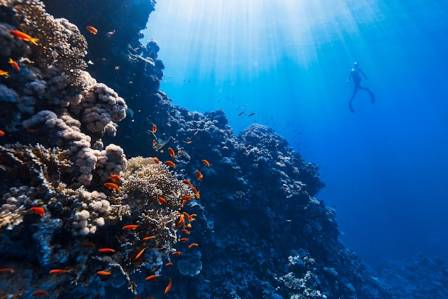
Australia’s Great Barrier Reef is one of the planet’s most extraordinary natural treasures. This vast underwater ecosystem covers an area comparable to a small nation and contains an incredible variety of marine habitats, colorful coral communities, and unique ocean life.
Theo Rhodes
Desk note
Brief tip
The full sticky-note brief continues below on the Monday desk.
Board
Desk Notes
Australia’s Great Barrier Reef is one of the planet’s most extraordinary natural treasures. This vast underwater ecosystem covers an area comparable to a small nation and contains an incredible variety of marine habitats, colorful coral communities, and unique ocean life.
However, the reef is constantly experiencing cycles of damage and regeneration. Periods of disturbance can transform vibrant coral ecosystems into algae-dominated environments before recovery begins again. As global temperatures continue to rise, these changes are becoming increasingly unpredictable and intense.
For more than 40 years, scientists at the Australian Institute of Marine Science have tracked the condition of the Great Barrier Reef through the Long-Term Monitoring Program, creating one of the world’s most extensive continuous records of coral reef health.
In recent years, researchers have observed increasingly dramatic changes in reef conditions. The widespread coral bleaching event of 2024, triggered by an unprecedented marine heatwave that affected reefs across multiple oceans, caused the greatest annual reduction in coral cover ever recorded in some areas.
Despite these challenges, new monitoring results reveal encouraging evidence that parts of the reef are beginning to recover.
Rising Ocean Temperatures and Coral Bleaching
In 2025, the Great Barrier Reef experienced its sixth coral bleaching event since 2016. It was only the second time in the reef’s history that bleaching occurred in consecutive years.
Fortunately, surveys showed that the 2025 bleaching event was less severe than the previous year’s event. This resulted in significantly lower coral mortality, demonstrating that bleaching events can have very different impacts depending on environmental conditions.
The length and strength of marine heatwaves play a major role in determining whether corals recover or die. When ocean temperatures decrease quickly enough, corals can restore their relationship with the microscopic algae that provide them with energy and color.
On the Great Barrier Reef, sea temperatures usually reach their highest levels between January and March. During this period, unusually warm ocean conditions can create ideal circumstances for coral bleaching.
A marine heatwave develops when ocean temperatures remain much higher than normal for a specific region and season for several consecutive days. In 2025, a heatwave affected the reef during spring, increasing water temperatures by as much as 1.5°C in some areas.
Although conditions were extremely challenging, later weather changes helped prevent what could have become a much more severe bleaching event.
Early Signs of Reef Recovery
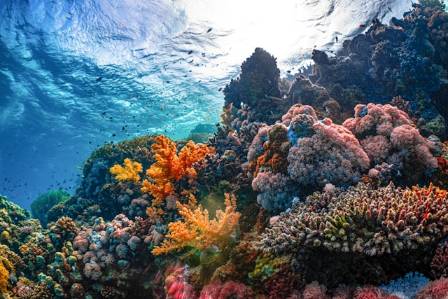
Following the devastating coral bleaching event of 2024, researchers recorded the largest single-year decline in living coral coverage during four decades of monitoring.
Coral cover measures the percentage of the reef surface occupied by living hard corals compared with algae, sand, and other marine organisms. It is an important indicator of overall reef health.
Encouragingly, recent observations suggest that some sections of the Great Barrier Reef have started to regain coral cover. In the northern section, extending from Cape York to Cooktown, coral coverage increased from 30% to 35.1%.
The central region, between Cooktown and Proserpine, also showed improvement, rising from 28.6% to 31.6%. Both areas are now above their long-term average coral coverage levels.
However, the southern section of the reef, from Proserpine to Gladstone, continues to experience difficulties. Coral cover there declined slightly from 26.9% to 26.4% and remains below historical averages.
How Weather Conditions Helped the Reef
In early 2026, scientists detected signs of coral bleaching in parts of the northern and central Great Barrier Reef. Fortunately, a monsoon system arrived soon afterward, bringing clouds, rainfall, and cooler conditions that helped reduce ocean temperatures.
Australia’s monsoon season generally occurs between October and April and plays an important role in regulating tropical ocean conditions.
During active monsoon periods, cloud cover reduces sunlight reaching the ocean surface, while rain and wind contribute to cooling. Strong waves and ocean mixing also help distribute heat by bringing cooler water from deeper areas toward the surface.
The seasonal change in tropical winds also creates wetter conditions across northern Australia, providing additional relief for coral ecosystems during periods of extreme heat.
Ongoing Threats to the Great Barrier Reef
Although scientific monitoring and forecasting have improved significantly, the Great Barrier Reef continues to face serious environmental pressures.
Modern climate models can now predict ocean temperature changes weeks or even months ahead, helping researchers identify potential marine heatwaves and bleaching risks before they occur.
However, recent bleaching events have left many coral communities weakened and more vulnerable to continued record-breaking ocean temperatures and future climate extremes.
One major threat comes from crown-of-thorns starfish, a species that feeds on coral tissue. Since the 1960s, the reef has experienced four major outbreaks of these coral predators, and another outbreak is currently developing in northern areas.
Scientists expect these starfish populations to continue expanding southward in coming years, creating additional pressure on already stressed coral communities.
The reef has also been affected by tropical cyclones. Storms can sometimes provide temporary cooling benefits, but powerful waves generated by cyclones can physically break and destroy coral structures over large areas.
Protecting the Future of the Reef
The Great Barrier Reef has repeatedly demonstrated its remarkable ability to recover after major disturbances. However, this natural resilience cannot be relied upon indefinitely.
Reducing greenhouse gas emissions and limiting global warming remain essential steps in protecting the reef’s future. Climate change is the greatest long-term challenge facing coral ecosystems around the world.
Scientific research and innovative conservation strategies may help strengthen coral resilience and improve the reef’s ability to survive changing conditions.
At the same time, protecting marine protected areas, reducing pollution, managing human impacts, and supporting sustainable practices are crucial to ensuring that the Great Barrier Reef does not merely survive, but continues to thrive for future generations.
More from this board
NOTE · en

A Spotlight on Innovation: The World's Top Biotech Startups
In the dynamic field of biotechnology, a new generation of companies is pushing scientific boundaries to address global challenges in health, agriculture, and industry. A recent analysis by LexisNexis Intellectual Property Solutions, utilizing the PatentSight+ platform, has identified ten startups leading this charge based on the strength and quality of their patent portfolios, as measured by the proprietary Patent Asset Index. This metric evaluates portfolio size alongside the technological value and global reach of protected inventions.
NOTE · en
Montane Forests of the Southwest
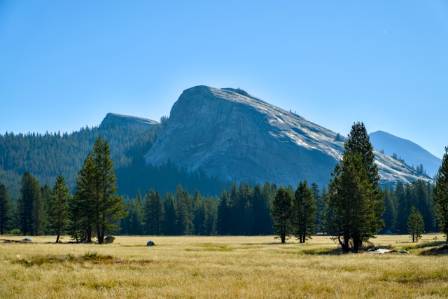
The American Southwest is often imagined as a dry landscape dominated by vast deserts, with only major urban areas such as Phoenix, Tucson, and Albuquerque standing out among the surrounding wilderness. While this perception is partly accurate, the region also contains cooler and wetter environments found at higher elevations, including mountain ranges and elevated plateaus.
NOTE · en

Embracing Timelessness: Wabi-Sabi Principles in Interior Design
Wabi-Sabi embraces the idea that imperfection can be beautiful. More than an interior design style, it represents a wider way of living that values mindfulness, simplicity, and sustainability. This traditional Japanese philosophy feels especially relevant in a modern world that often places too much emphasis on speed, perfection, and constant improvement. By appreciating signs of age, natural variation, and authentic materials, Wabi-Sabi encourages us to accept our surroundings as they are. It helps create a stronger appreciation for everyday life while promoting a more thoughtful and sustainable approach to our homes.
NOTE · en

Essential Facts Regarding Virtual Reality Headsets
Virtual reality (VR) utilizes visual and auditory signals, along with other sensory data, to construct a deeply immersive, digital surroundings. By fully shielding a person's eyes and often their ears, VR headsets plunge the individual into an artificial experience. These devices monitor head rotations and tilt, which enhances the sensation of "presence" by enabling users to scan their virtual surroundings naturally, just as they would in the physical world. Within educational contexts, these headsets offer the chance to engage in powerful simulations and safe training exercises, permitting students to investigate subjects and environments that would be impossible to access within a standard classroom.
NOTE · en
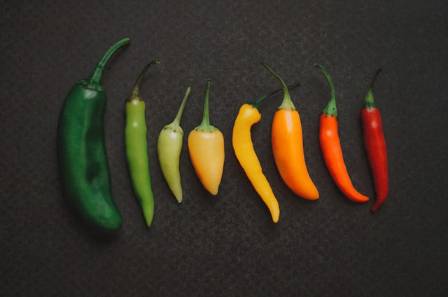
What are the 5 main types of chilli pepper?
Chillies are a remarkably varied group of plants that have been grown, exchanged and adapted across different parts of the world for hundreds of years. The five primary cultivated species each have their own distinctive flavours, leaf forms, flower characteristics and cultural backgrounds.
NOTE · en

We Tasted 10 Flavored Sparkling Water Brands and This Is the Best
Sparkling water is a staple in the world of healthy drinks. With zero calories, no sugar, and plenty of flavor when you choose wisely, it’s a go-to alternative to soda.