Monday brief
The Sooty Grouse, Formerly the Blue Grouse
One of the strangest calls I had ever heard echoing through the mountain forests sounded like someone blowing across the opening of an enormous glass jug, only much deeper and louder. The mysterious note seemed to bounce off rocky outcroppings and weave between the trees like a chilling, almost ghostly breath that raised the hairs on my skin. I had always assumed the sound came from an elk, especially since spring seemed like the obvious season for animals preparing for courtship and mating.
Alina Vesper
Desk note
Brief tip
The full sticky-note brief continues below on the Monday desk.
Board
Desk Notes
One of the strangest calls I had ever heard echoing through the mountain forests sounded like someone blowing across the opening of an enormous glass jug, only much deeper and louder. The mysterious note seemed to bounce off rocky outcroppings and weave between the trees like a chilling, almost ghostly breath that raised the hairs on my skin. I had always assumed the sound came from an elk, especially since spring seemed like the obvious season for animals preparing for courtship and mating.
Hearing the Mysterious Call on Mount Rainier
A few days ago, however, I heard that same strange sound near the snow line on Mount Rainier. There were two things that immediately made me question my earlier assumption. First, it was already the middle of July. Second, the sound came only moments after an unusual bird, roughly the size of an owl, flew over my head and landed close to another bird I was attempting to photograph.
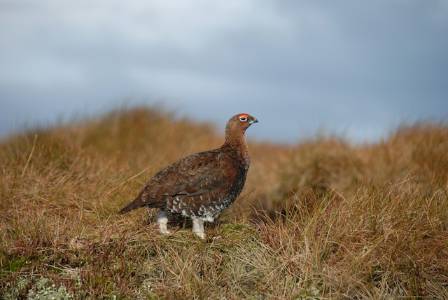
The second bird looked somewhat like a chicken, and at first I assumed it was a blue grouse. For those who are new to my wildlife photography, I am now entering my second year of photographing Washington’s wildlife, so I am still learning many of the species and behaviors found in the region.
The mysterious call sounded something like a deep, resonant “Whuuuhhhhhhhh!” repeated several times, echoing through the mountain landscape.
A Remarkable-Looking Bird
The bird turned out to be one of the strangest-looking birds I had encountered in quite some time. Fortunately, I recognized it almost immediately from one of my field guides.
The reason I knew what it was came from a very brief encounter the previous week in the Olympic Mountains. I had caught only a quick glimpse of one there and never managed to get a clear photograph before the bird disappeared over the mountainside.
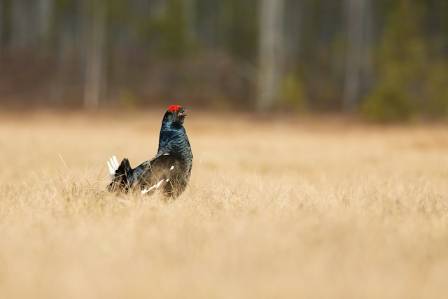
A Male Sooty Grouse Focused on a Female
The male grouse I encountered on Mount Rainier was completely absorbed by the female I had been following. He was so focused on her that he seemed entirely unaware of my presence.
This was actually the second female grouse I had photographed within about half an hour. Rather than continuing to concentrate on the females, I decided to turn my attention toward the male.
He was an impressive sight, displaying his plumage and courtship behavior with an unmistakable air of confidence. If I had to choose a less formal word for his attitude, “cockiness” would probably describe it best.
To my delight, I was able to photograph him repeatedly without disturbing either bird. I could remain relatively close while capturing a series of images, and neither the male nor the female appeared bothered by my presence.
Learning More About the Sooty Grouse
After returning to my desk, I spent some time researching the bird so that I could understand not only its identity but also its role within the surrounding ecosystem.
Many of the references I initially consulted still identified the bird as a blue grouse, Dendragapus obscurus. However, some examples I found online and in my field guides appeared somewhat different from the bird I had photographed, while others looked almost identical.
Fortunately, Audubon’s digital field guides are regularly updated, which helped clear up the confusion.
The Blue Grouse Was Split Into Two Species
I learned that what was once commonly called the blue grouse was reclassified into two separate species in 2006. The division was based on both DNA evidence and behavioral differences.
The sooty grouse, Dendragapus fuliginosus, occupies the Pacific Northwest coastal region, with its range extending from California northward to the Yukon.
The dusky grouse, which retains the scientific name Dendragapus obscurus, is more strongly associated with the interior regions of North America, particularly the Rocky Mountains.
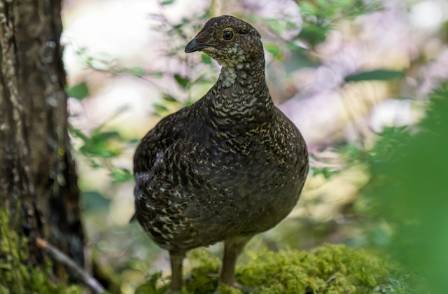
Even before learning about this taxonomic split, I could understand why identifying the bird had initially been confusing. Differences in plumage and in the coloration of the bare skin around the eye comb and neck made the distinction less obvious to me.
Seeing the bird in person and then comparing it with updated field-guide information finally helped me understand that I had encountered a Sooty Grouse rather than the blue grouse I had originally assumed.
More from this board
NOTE · en

Fascinating Facts About Dolphins
Dolphins are truly remarkable creatures. They possess exceptional social skills, intelligence, agility, and playfulness, while also sharing many emotional traits with humans. The diversity among dolphin species is impressive, each one boasting its own distinct personality and attributes.
NOTE · en

The tastiest sweet potatoes in the world
Roasted sweet potatoes are one of my absolute favorite ways to enjoy vegetables. They turn out with a deep orange glow, a naturally creamy bite, and a rich, caramel-like sweetness that makes them hard to resist.
NOTE · en

2 Artists Who Feature Bridges in Their Work
For my ongoing project, I’ve been focusing on the landscape of Lacock—a place rich with distinct elements, including Lacock Abbey, winding rivers, shallow fords, the main bridge, a smaller ford bridge, and sprawling vistas dotted with wildlife.
NOTE · en
The Global Success and Biology of the House Sparrow
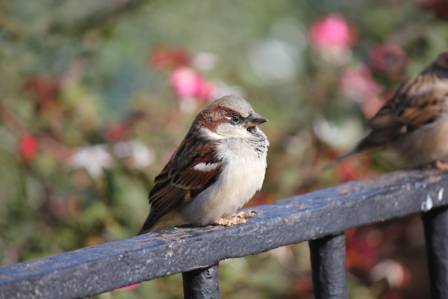
The House Sparrow (Passer domesticus) is one of the most prolific and recognizable songbirds on the planet. Its strategy for survival is remarkably straightforward: it lives wherever humans do. Originally inhabiting Eurasia and northern Africa, this resilient bird has established itself in urban and agricultural landscapes worldwide. Its introduction to North America began in New York City in 1851, and since then, its aggressive and adaptable nature has allowed it to thrive in environments ranging from bustling city sidewalks to isolated farmsteads.
NOTE · en

17 New Cars To Look Forward to in 2025
2025 promises to be a dynamic year for the automotive industry as it navigates the shift away from fossil fuels. While pure battery electric vehicles (BEV) and plug-in hybrid electric vehicles (PHEV) saw a slight sales dip early in 2024, they rebounded strongly in the second half—especially in the luxury segment—while hybrid vehicle sales surged dramatically. Embracing this unpredictability, our list of the most anticipated 2025 cars breaks from recent all-electrified lineups to include gasoline-powered options, offering something for every budget, style preference, performance craving, and vehicle type. From outrageous electric concepts to reimagined classics, these 17 models are set to define the year ahead for motoring enthusiasts.
NOTE · en

Uncovering the Breakfast Habits of Western Cultures
Breakfast is widely considered one of the most essential meals of the day, yet what people eat in the morning differs greatly from one country to another. Across Western nations—including the United States, the United Kingdom, Canada, Australia, and many parts of Europe—morning meals reflect a mix of cultural heritage, regional ingredients, personal tastes, and modern lifestyles. This article explores the foods, customs, and evolving trends that shape breakfast culture throughout the Western world.