Monday brief
Techniques for Painting Dramatic and Luminous Ocean Waves
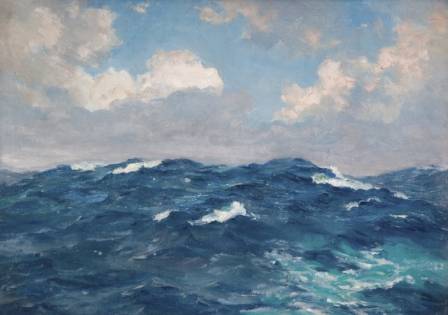
Capturing the raw energy of a breaking wave requires a deep understanding of light, motion, and atmosphere. Seascape painting becomes truly compelling when you focus on stormy scenes, where the interplay between dark skies and brilliant water creates a sense of high drama. By mastering the contrast between shadowed water and sunlit crests, you can produce an artwork that feels both powerful and alive.
Nathaniel Brooks Carter
Desk note
Brief tip
The full sticky-note brief continues below on the Monday desk.
Board
Desk Notes
Capturing the raw energy of a breaking wave requires a deep understanding of light, motion, and atmosphere. Seascape painting becomes truly compelling when you focus on stormy scenes, where the interplay between dark skies and brilliant water creates a sense of high drama. By mastering the contrast between shadowed water and sunlit crests, you can produce an artwork that feels both powerful and alive.
The Role of Light and Tonality
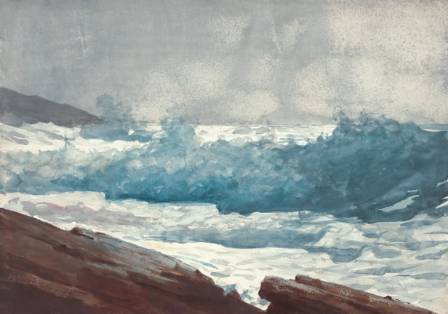
The success of a seascape often depends on the direction of the light source. Positioning the sun behind or to the side of the water is particularly effective. This placement creates a sharp tonal contrast between the shadowed face of the wave and its glowing, translucent crest.
Tonality—the relationship between light and dark values—is the key to evoking emotion. Strong contrasts generate excitement and agitation, while subtle graduations feel more serene. A fundamental rule of thumb for depth is that as objects move toward the foreground, darks become more intense and lights become more brilliant. Conversely, distant elements occupy a much narrower tonal range, with softened lights and muted darks.
Structural Composition and Planning
A balanced composition prevents the viewer from becoming distracted and keeps the focus on the narrative of the sea. When designing your scene, avoid placing the focal point in the dead center. Instead, use a high or low horizon line to emphasize either the sky or the foreground water. In a dramatic wave painting, a high horizon line allows more space to showcase the turbulent foreground.
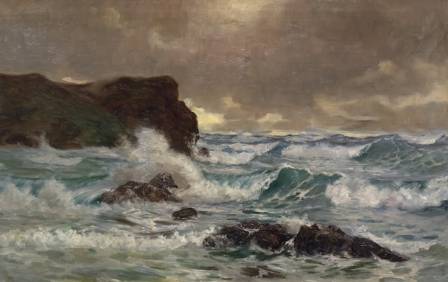
Rhythm can be introduced through the placement of secondary elements like rocks, which can subtly direct the eye toward the main breaking wave. Before touching the canvas, always create small thumbnail sketches. This planning phase allows you to resolve compositional issues early, ensuring that the final work feels intentional rather than cluttered.
The Blocking-In Phase
Beginning with a warm underpainting, such as a thin layer of Burnt Sienna, provides a harmonic base that glows through subsequent layers. Start by blocking in a moody, dark sky. A desaturated, stormy sky serves as a perfect backdrop to make the white highlights of the crashing water truly "pop."
When moving to the water, use a large flat brush to establish the various zones of the ocean. For the translucent "eye" of the wave, mix teals and greens with white. As the water moves into deeper troughs, transition into darker blues. At this stage, focus on broad gestural strokes to capture the general shapes of the swell and the shadowed regions of the foam. This creates a solid foundation of color and value without getting bogged down in fine details.
Developing Depth and Detail
Once the initial layers are dry, you can begin refining the textures. It is a common mistake to use pure white too early. Most "white" water is actually a mid-tone influenced by the colors of the sky. By using slightly greyed or blueish whites for the bulk of the foam, you leave yourself room to add brighter highlights later, which creates a three-dimensional effect.
Use specialized brushes, such as dagger or fan brushes, to paint the intricate foam patterns and "tendrils" of air trapped in the breaking wave. For the surrounding rocks, aim for a "wet" look by adding highlights to the edges where the sun reflects off the damp surfaces. Increasing the color saturation in the rocks with warm ochres and siennas provides a beautiful counterpoint to the cool tones of the sea.
Final Highlights and Atmospheric Touches
The final stage is where the painting truly comes to life. Apply your lightest tones—pure Titanium White—sparingly to the very peaks of the waves and the most active areas of the foreground spray. This creates the illusion of sparkling, sun-drenched water.
To add a sense of realism, incorporate reflected light on the upper surfaces of the rocks using cool violets or teals. These subtle color shifts suggest that the water and sky are interacting with the solid land. By carefully layering these final highlights over your established mid-tones, you achieve a sense of movement and luminosity that captures the spirit of the Atlantic.
More from this board
NOTE · en
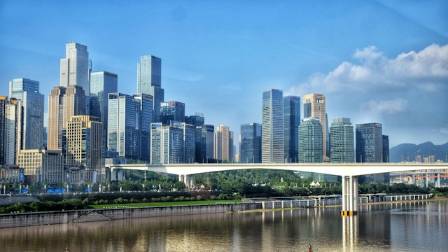
Chongqing's Ultimate Thrill: Raffles City Skywalk
Chongqing is a city unlike almost anywhere else in the world. Often called the “mountain city” or “3D city,” it is built among mountains and waterways, with roads and buildings arranged across dramatically different elevations. After dark, the city becomes an extraordinary display of lights and towering structures that creates a scene difficult to find anywhere else.
NOTE · en
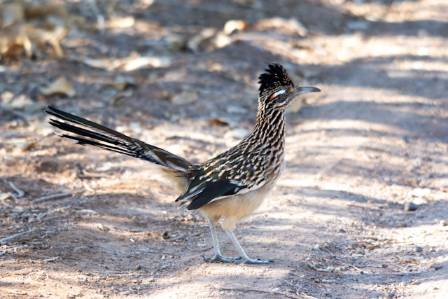
Understanding the Unique Traits of the Roadrunner
Commonly recognized from their legendary appearances in animation, actual roadrunners are far more complex and intriguing than their cartoon counterparts. These birds belong to the cuckoo family, and while they differ significantly from their relatives in appearance, their vocalizations often consist of a distinct "coo" sound. As primarily ground-dwelling birds, they have evolved a lifestyle centered on speed and agility rather than flight.
NOTE · en
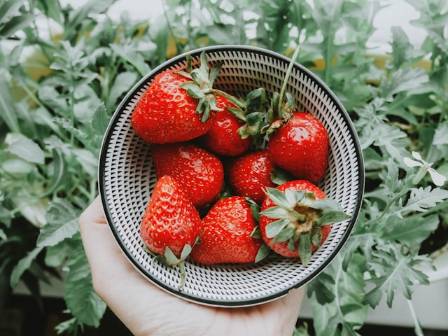
10 Creative Ways to Use Strawberry Tops
Don’t toss those strawberry tops in the trash just yet—these leafy bits are surprisingly versatile. Instead of wasting them, try one of these clever ways to give strawberry tops a second life, both in the kitchen and beyond.
NOTE · en
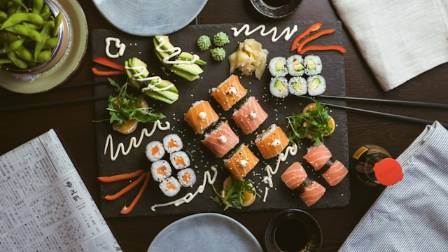
A Complete History Of Sushi: From Narezushi To Global Phenomenon
Sushi stands as one of humanity’s most extraordinary culinary evolutions, transforming from a pragmatic preservation method into a globally beloved cuisine that transcends cultural divides. This iconic dish, defined by its harmonious blend of vinegared rice and diverse ingredients—most famously raw seafood—traces its roots to Southeast Asia’s rice paddies, evolving through centuries of adaptation, refinement, and innovation to become both a symbol of Japanese culture and a staple of international dining. Its journey reflects broader narratives of technological progress, cultural exchange, economic development, and shifting social dynamics, proving that even the simplest of foods can carry profound historical weight.
NOTE · en

How Playful Geometric Building Blocks Can Redefine Modern Architecture
Architecture is much more than simply completing a physical building because a profound design concept retains its universal value even if it remains unbuilt. A unique structural framework developed in the early 1980s demonstrates how elementary shapes can be successfully applied to both educational workshops and real-world residential construction. This innovative design methodology has been shared with children and families in interactive community workshops over the years, encouraging participants to build unique physical objects using fundamental geometric components to discover the joy of spatial creation.
NOTE · en
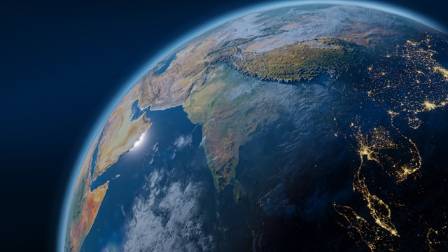
Essential Knowledge Regarding Planet Earth
Earth is a remarkable world, serving as our home in the vastness of space. While we inhabit this planet daily, its physical characteristics, history, and movement through the solar system involve complex scientific processes. The following overview details the fundamental nature of Earth, from its ancient origins to its unique ability to sustain life.